Boat School

Geert van der Kolk • 4 maart 2021

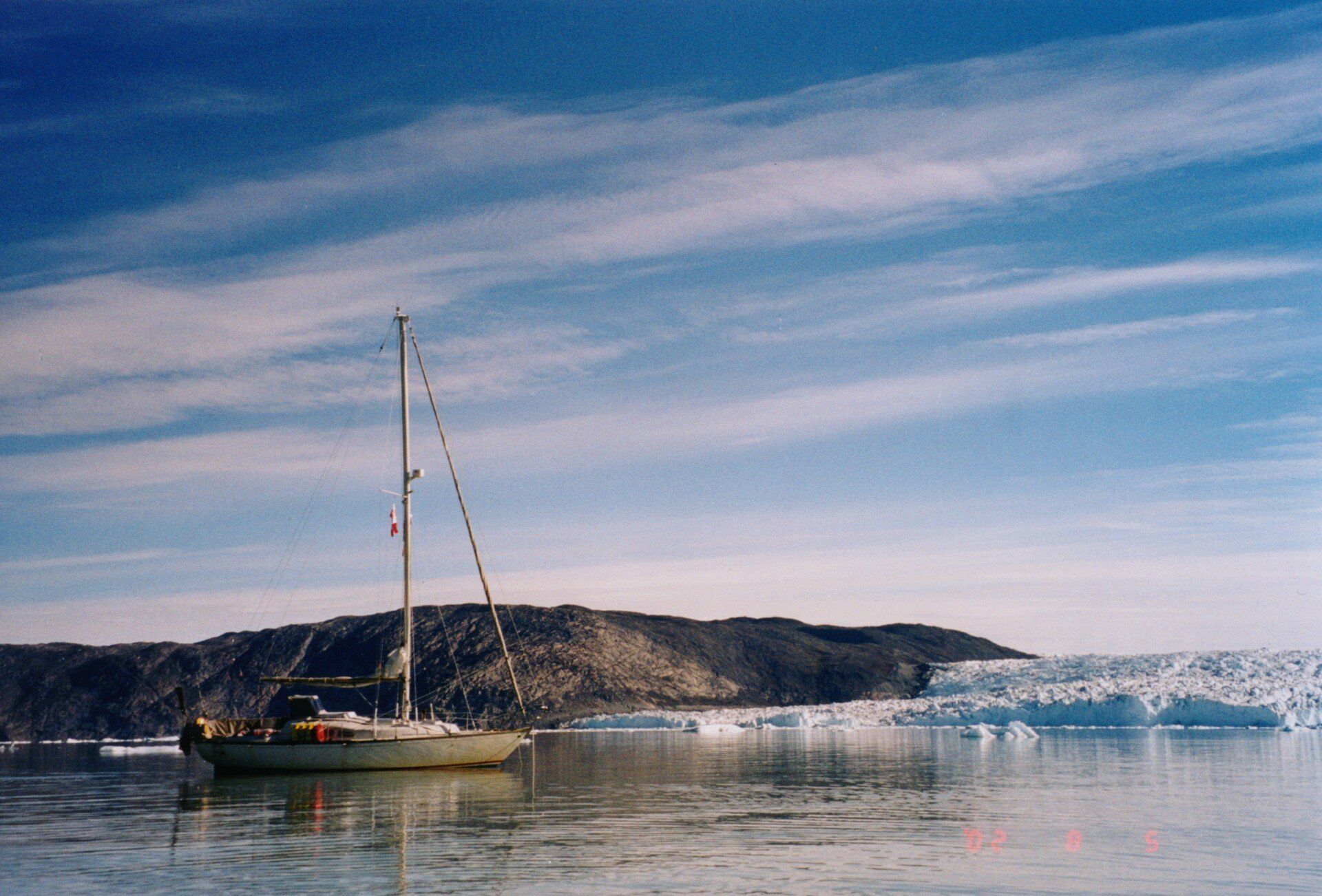
When we sailed to the Bahamas, the children were eleven and thirteen. They were in school, of course, but in the US education is organized in a unique way. There are no national examinations, there is no Federal oversight or inspection, everything is done at a local level. In addition, there are countless private schools that do not answer to any authority.

Nico and Jana attended the public school. On the advice of the principal I called the County Commissioner and told him we were going away for a while.
"How long?" he asked.

"At least a year," I said.

"And where are you going?"

"First to Florida, then to the Bahamas."

"So you are leaving our county?"

"Yes."

"In that case your children, as far as we’re concerned, don’t exist anymore. When they return, they will have to take an entrance exam to see in which grade they belong.”

In America there is compulsory education, but kids don’t actually have to attend a school. You can teach your children at home and if you choose to do so, you are not an exception. There are an estimated 1.5 million children in 'home school.' Most come from strict religious families, who consider public school to be ungodly and have no money for a private alternative. But the 'home school' is also a solution for sailors with school-age children.

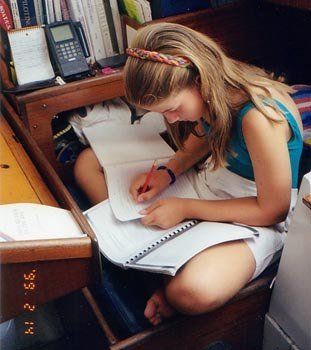
If you are not a teacher yourself, the idea that you have to teach your own children is a bit intimidating, but in practice organizing a boat school is not so hard. Any decent bookstore has a shelf full of self-study guides for people preparing for high school equivalency certificates and entrance exams. The topics range from algebra to Hebrew and biology to American history. Each chapter concludes with a test. All I had to do was cut out the answers, which were in the back of the books, and check Jana and Nico’s test results.

The great thing about a boat school is that apart from required topics like English ​​and math, you can teach whatever you want. We studied every fish, clam and lobster we caught, delved into dolphin identification in Florida, space travel as we sailed past the Kennedy Space Center on Cape Canaveral and saw a space shuttle take off, the natural history of sharks and mangroves, and the geology of the Bahamas. Over dinner we read The Adventures of Huckleberry Finn, Macbeth, the Odyssey, the good books of the Bible (Genesis, Samuel, Marc) and Robert Graves' The Use and Abuse of the English Language.

We had a simple arrangement: school starts early in the morning. When we are at sea and the weather is a bit rough, you don't have to study. On the other hand, we’re abolishing the weekend. You do three mandatory chapters every day. Then you are free.

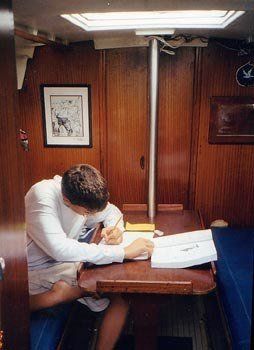
The children worked in the cabin without our supervision. They were always ready in two and a half to three hours. Then they disappeared with the dinghy. They went to the beach, or snorkeled and fished with our Hawaiian sling, a trident that you launch with a thick elastic. When they met other boat children - which was the case on almost every island in the Bahamas - we didn't see them again until evening.

We checked the tests and the essays. It all looked pretty good, but we also wanted to know what the children thought of our boat school. So we held an evaluation. They only had one request: more independence.

"When I'm in a real algebra mood," Nico said, "I want to continue with it, and not switch to English after one chapter."

"We know exactly how many chapters there are in each book," Jana said. 'We can calculate ourselves how much we need to do to be ready at the end of the year.'

From that day on, they made their own schedule, which they handed in to us every morning on a piece of paper.

When the children returned to their old school they had to take an entrance exam. The results were devastating, for the school. Although Jana and Nico had spent less than half the time on schoolwork than their classmates, they both could skip a year in algebra, Jana also in French, and Nico didn’t have to do any geometry anymore.

They also learned things during their year on the boat that are not on the curriculum of any school and may not be terribly useful in later life: sailing an old yacht, fishing in the Gulf Stream, docking with a crosswind, changing the oil of a diesel engine, anchoring in water with shifting tidal currents, messing with epoxy, charting a course with dividers and parallel rulers. But they have also experienced the independence and freedom that are the essence of a long sailing cruise.

door Geert van der Kolk 28 juli 2026
Père Lachaise worked in education, but he owes his fame to his side job as confessor to Louis XIV. He lived with a pack of Jesuits in a large house on the east side of the city. The revolution not only made short work of the monarchy, but also of the Catholic Church's real estate. Napoleon had the Jesuits' vegetable garden ploughed up and turned it into a public cemetery. It is only a fifteen-minute walk from my apartment, and I pop over there every now and then to visit Proust and Oscar Wilde. If you get lost—and that is a pleasure among the large old trees—you sometimes bump into Chopin, or Modigliani, or Jim Morrison. One afternoon, as I was looking for the exit, it occurred to me that the cemetery is so famous that if you ever want to be buried there yourself, you have to think ahead a bit. I assumed there would be a substantial waiting list and that it was high time to put my name on it. I hoped you would be able to indicate a preference. I could, after my death, live with idea of having Proust or Wilde as a neighbor. Or with Edith Piaf; she’ll probably keep her mouth shut in the evenings now. Preferably not Morrison; I’ve always thought he was a pretentious loudmouth. Most of all, I would like to lie next to the Mur des Fédérés, in a corner of the cemetery, where the last Communards gathered in late May 1871 after their attempt to turn Paris into something socialist had failed. They held out to the last man against the government army. That was heroic, and practical too. They could be buried right there on the spot. The cemetery’s office is on all sides surrounded by gravestones, so you can get used to the idea. And there is no waiting list. At first, I misunderstood that. For a moment, I thought you could just knock on the gate when the time came. That seemed a reassuring thought to me, and of course, it was too good to be true. The official on duty, a friendly man who gave the impression that he often talked with people who think about death, explained that you had to call to ask if there was a spot available. One may only call if one lives in Paris, he said—which seemed quite logical to me at a municipal cemetery—and if one is dead. In French, you can get away with that; “on” is much more versatile than one —so he didn't understand why I had to hold back my laughter. A waiting list, he concluded, would be unfair. Every citizen, rich or poor, famous or obscure, must have the same chance. During our conversation, he received three calls and had to turn people away each time. ‘Do you ever have funerals here?’ I asked. 'Certainly, monsieur ‘,’ said the official proudly. ‘Many families have thought about the future and have a grave with some space left. And sometimes someone who calls gets lucky; that happens too. Moreover, there is always room in our crematorium.’
door Geert van der Kolk 28 juli 2026
Père Lachaise werkte in het onderwijs, maar hij dankt zijn faam aan zijn bijbaantje als biechtvader van Lodewijk XIV. Hij woonde met een roedel jezuïeten in een groot huis aan de oostkant van de stad. De revolutie maakte niet alleen korte metten met het koningshuis, maar ook met het vastgoed van de katholieke kerk. Napoleon liet de moestuin van de jezuïeten omploegen en maakte er een openbare begraafplaats van. Het is maar een kwartiertje van mijn appartement en ik loop er zo nu en dan even heen om bij Proust en Oscar Wilde langs te gaan. Als je verdwaalt - en dat is een genoegen tussen de grote oude bomen - kom je soms zomaar Chopin tegen, of Modigliani, of Jim Morrison. Op een namiddag toen ik op zoek was naar de uitgang kwam het bij me op dat de begraafplaats zo beroemd is dat je, als je er zelf ooit wilt liggen, een beetje vooruit moet denken. Ik nam aan dat er een flinke wachtlijst zou zijn en dat het hoog tijd was om mijn naam erop te zetten. Ik hoopte dat je een voorkeur zou kunnen opgeven. Met Proust of Wilde als buurman zou ik na mijn dood best kunnen leven. Of met Edith Piaf, die zal nu ‘s avonds haar mond wel houden. Morrison liever niet, die heb ik altijd een pretentieuze schreeuwlelijk gevonden. Het liefste zou ik bij de Mur des Fédérés liggen, in een uithoek van de begraafplaats, waar de laatste Communards zich eind mei 1871 verzamelden nadat hun poging om van Parijs iets socialistisch te maken was mislukt. Ze hielden tot de laatste man stand tegen het leger van de regering. Dat was heroïsch, en ook praktisch. Ze konden meteen ter plekke worden begraven. Het bureau dat erover gaat is midden tussen de grafzerken, zodat je vast aan het idee kunt wennen. En er is geen wachtlijst. Eerst begreep ik dat verkeerd. Ik dacht even dat je gewoon kon aankloppen als het zover was. Dat leek me een geruststellend idee en het was natuurlijk te mooi om waar te zijn. De dienstdoende ambtenaar, een vriendelijke man die de indruk wekte dat hij vaak sprak met mensen die over de dood nadenken, legde uit dat je moest bellen om te vragen of er plaats was. Men mag alleen bellen als men in Parijs woont, zei hij, wat mij nogal logisch leek op een gemeentelijke begraafplaats, en als men dood is. In het Frans kan je dat maken, “on” is veelzijdiger dan ons “men”, dus hij snapte niet waarom ik mijn lachen in moest houden. Een wachtlijst, besloot hij, zou onrechtvaardig zijn. Elke burger, arm of rijk, beroemd of obscuur, moet dezelfde kans hebben. Tijdens ons gesprek werd hij drie keer gebeld en moest telkens nee verkopen. ‘Vinden hier ooit begrafenissen plaats?’ vroeg ik. ‘Jazeker, monsieur,’ zei de ambtenaar trots. ‘Veel families hebben aan de toekomst gedacht en beschikken over een graf waar nog wat plaats over is. En soms heeft iemand die opbelt ineens geluk, dat komt ook voor. Bovendien is er altijd ruimte in ons crematorium.’
Foto van de auteur Geert van der Kolk
door Geert van der Kolk 1 maart 2021
In the autumn of 1980 I traveled by train from Holland via Osnabrück and Hanover to East Berlin. I was twenty-six at the time. On the way I read "The Berlin Stories" by the English writer Christopher Isherwood, who was riding the same rails exactly fifty years earlier, when he was twenty-six.
Foto van een jongen die schrijft in een boot
door Geert van der Kolk 8 februari 2021
Toen we naar de Bahama's zeilden waren de kinderen elf en dertien. Ze zaten natuurlijk gewoon op school, maar in Amerika is het onderwijs op een unieke manier geregeld. Landelijke examens bestaan niet, er is geen ministerie dat toezicht houdt, alles gebeurt op plaatselijk niveau. Er zijn bovendien talloze particuliere scholen die zich van geen enkele inspectie iets aantrekken. Nico en Jana zaten op de openbare gemeenteschool. Op advies van de directeur belde ik het kantoor van de wethouder en vertelde dat we een tijdje weg gingen. 
Photo of a typewriter
door Geert van der Kolk 6 februari 2021
'He live here?' the punk asked. 'This is a restaurant.' 'It's the right address ,' I said. We parked at the bottom of the hill, at the river bank. 'Caddie ain't here,' the punk said. He had a talent for making superfluous remarks. The parking lot was empty. I straightened my tie and got out of the car. The punk didn't move.
Foto van een boot op het water met blauwe lucht
door Geert van der Kolk 30 januari 2021
Even dachten we dat we in de verte een grote witte stad zagen. We zagen paleizen en kathedralen en herenhuizen met hoge puntdaken, die waren omringd door een muur met glinsterende torens. In werkelijkheid waren het honderden immense ijsbergen die de horizon van noord tot zuid opvulden. Toen we dichterbij kwamen brak de muur van ijs open en tussen de grote bergen lagen velden vol schotsen en kleinere ijsbrokken. We hadden nog tien mijl te gaan tot Ilulissat aan de mond van de Jakobshavn Isfjord, maar konden niet verder. De Isfjord is de grootste gletscher aan de westkust van Groenland en de baarmoeder van alle ijsbergen in de Atlantische Oceaan. 
Foto van een typemachine
door Geert van der Kolk 23 januari 2021
Teresa was na de Fiesta van de heilige Salvador in de stad blijven hangen, meer zomaar dan met opzet, en na een week was haar geld op. 'Ik blijf liever hier,' zei ze. 'Thuis in Gotera is toch geen werk, en het is er zo saai door de oorlog.' Ze zat op de rand van Antonieta's bed. 'Blijf dan,' zei Antonieta vanuit de douche. Ze waste haar voeten in de wasbak. 'Hoe laat is het? Is het al zo laat? Het water is op.' 'Ik heb geen geld,' zei Teresa. 'Don Berto vroeg gisteren wanneer ik zou betalen, omdat hij ook rekeningen heeft.' Antonieta kwam uit de douche, in een vuilwit nachthemd. 'Ik wou dat het meer regende, dan hadden we meer water ' 'Je kan ook eerder opstaan,' zei Teresa, die haar kleren al had gewassen in de 
Foto van de auteur Geert van der Kolk
door Geert van der Kolk 26 november 2020
 In het najaar van 1980 reisde ik met de trein via Osnabrück en Hannover naar Oost-Berlijn. Ik was toen zesentwintig. Onderweg las ik 'The Berlin Stories' van de Engelse schrijver Christopher Isherwood, die precies vijftig jaar eerder, toen hij zesentwintig was, over dezelfde rails reed.
Foto een schilderij van Gatsby met blauwe achtergrond
door Geert van der Kolk 26 november 2020
I n Washington  ging ik elke drieduizend mijl met mijn auto naar de Ford garage in Rockville, een grote, kleurloze voorstad. De servicebeurt (olie verversen, nieuwe filters, wielen verwisselen indien nodig) duurde ongeveer een uur. Er was een wachtkamer met een koffieautomaat, een televisie en oude jaargangen van National Geographic Magazine, maar ik ging altijd naar buiten en liep langs de showroom met nieuwe Mustangs en Thunderbirds en de parkeerplaats met occasions, langs een elektronica discount en een meubelpaleis. Mijn bestemming was het kerkhof van St. Mary’s Catholic Church. Daar ligt, ingeklemd tussen de zes rijbanen van Rockville Pike, de vier rijbanen van Veers Mill Road en het dubbelspoor van de metro, F. Scott Fitzgerald begraven.